
Why extended producer responsibility in India fails non-metallic waste
 Stefan de LindeFounder & CEO
Current extended producer responsibility regulations pay recyclers based on metallic raw materials extracted from complete intact electronics. In countries like India, where over two million informal workers gather and dismantle waste, intact devices rarely make it to formal facilities. Informal collectors harvest the valuable copper, aluminum, and printed circuit boards first. Standard regulatory schemes ignore these pre-harvested devices, leaving residual plastic housings, cathode ray tube glass, and hazardous toner cartridges without financial support.
Minimise released a white paper titled Unlocking the Potential of the Informal Sector in Indian E-Waste Recycling, co-authored with Landbell GreenForest Solutions and E[co]work. The study reveals the empirical mass balance of harvested electronics and demonstrates why e-waste compensation is required to fund the recovery of zero-value waste streams.
Data from nineteen tons of Delhi e-waste
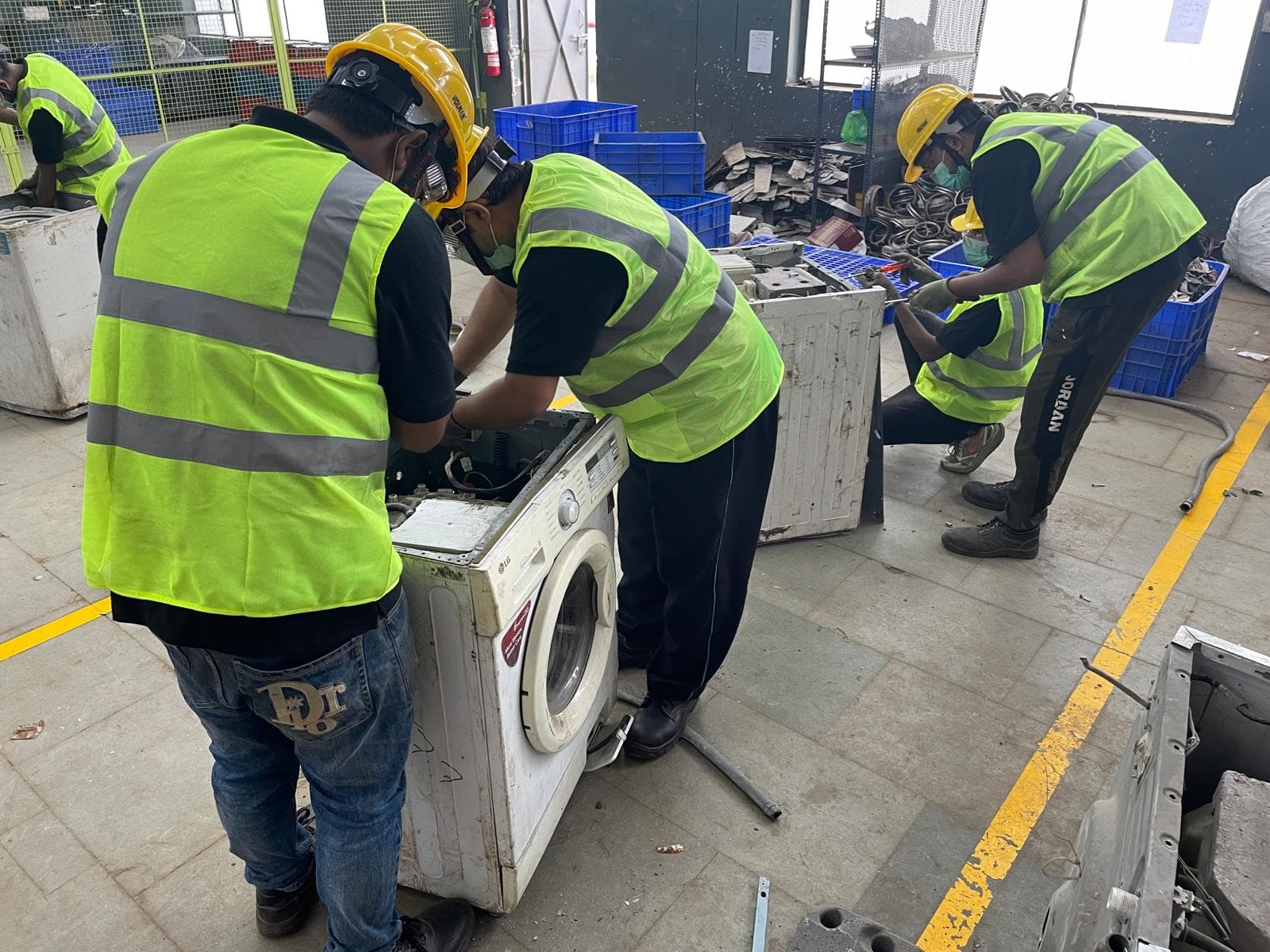
Over six weeks starting in August 2024, the project collected 18,927 kilograms of electronic waste in the New Delhi region. The collection split inventory evenly between intact devices and pre-harvested devices across washing machines, displays, and printers. First-level manual dismantling at an authorized E[co]work facility generated precise mass balance data for each category.
- Intact displays contained 6.5 percent circuit boards and wires compared to 1.4 percent in harvested displays.
- Intact displays yielded 22.3 percent black plastics compared to 10.0 percent in harvested displays.
- Glass accounted for roughly 20 percent of display weight across both harvested and unharvested streams.
- Harvested washing machines contained 20.8 percent concrete compared to 15.9 percent in intact units as informal collectors added weight to hit collection targets faster.
- Intact washing machines yielded 30.0 percent pure white plastics compared to 24.8 percent in harvested units.
- Printers yielded average plastic concentrations of 23.5 percent black plastics and 14.9 percent white plastics.
- Harvested printers contained 9.6 percent hazardous toner cartridges compared to 5.3 percent in intact units.
Preserving post-consumer plastics through manual dismantling
European industrial recyclers rely on high-speed mechanical shredders. Shredding mixes non-ferrous metals with plastics and destroys pure fractions of acrylonitrile butadiene styrene and polypropylene. Manual dismantling in emerging markets keeps high-purity white and black post-consumer recycled plastics intact.
Compliance schemes do not compensate recyclers for collecting or sorting these plastics. When informal workers strip the circuit boards out of a computer monitor or printer, the remaining plastic shell loses its commercial value under national legislation. This structural oversight forces informal handlers to burn or dump non-metallic remnants.
How e-waste compensation closes the economic gap
E-waste compensation offers a direct market-based solution to the regulatory failure of standard extended producer responsibility. Rather than subsidizing intact devices for precious metal recovery, e-waste compensation allows organizations to purchase software-verified proofs of recycling for specific uncompensated waste streams.
Platforms like Minimise issue digital proofs that track physical waste collected and manually recycled in locations lacking formal infrastructure. Compensating for non-metallic fractions, pre-harvested shells, and toxic printer cartridges gives informal collection networks a direct financial incentive to bring stripped devices into authorized recycling centers.
This system delivers verified additionality by funding material recovery that national laws leave behind. Device manufacturers and enterprise IT buyers get access to traceable post-consumer recycled plastics while stopping toxic environmental contamination at the source.
Read the full white paper
The full research methodology, category mass balances, and regulatory recommendations are available in the white paper published by Minimise. The complete document can be accessed by filling out the information at the form at the bottom of this page.